
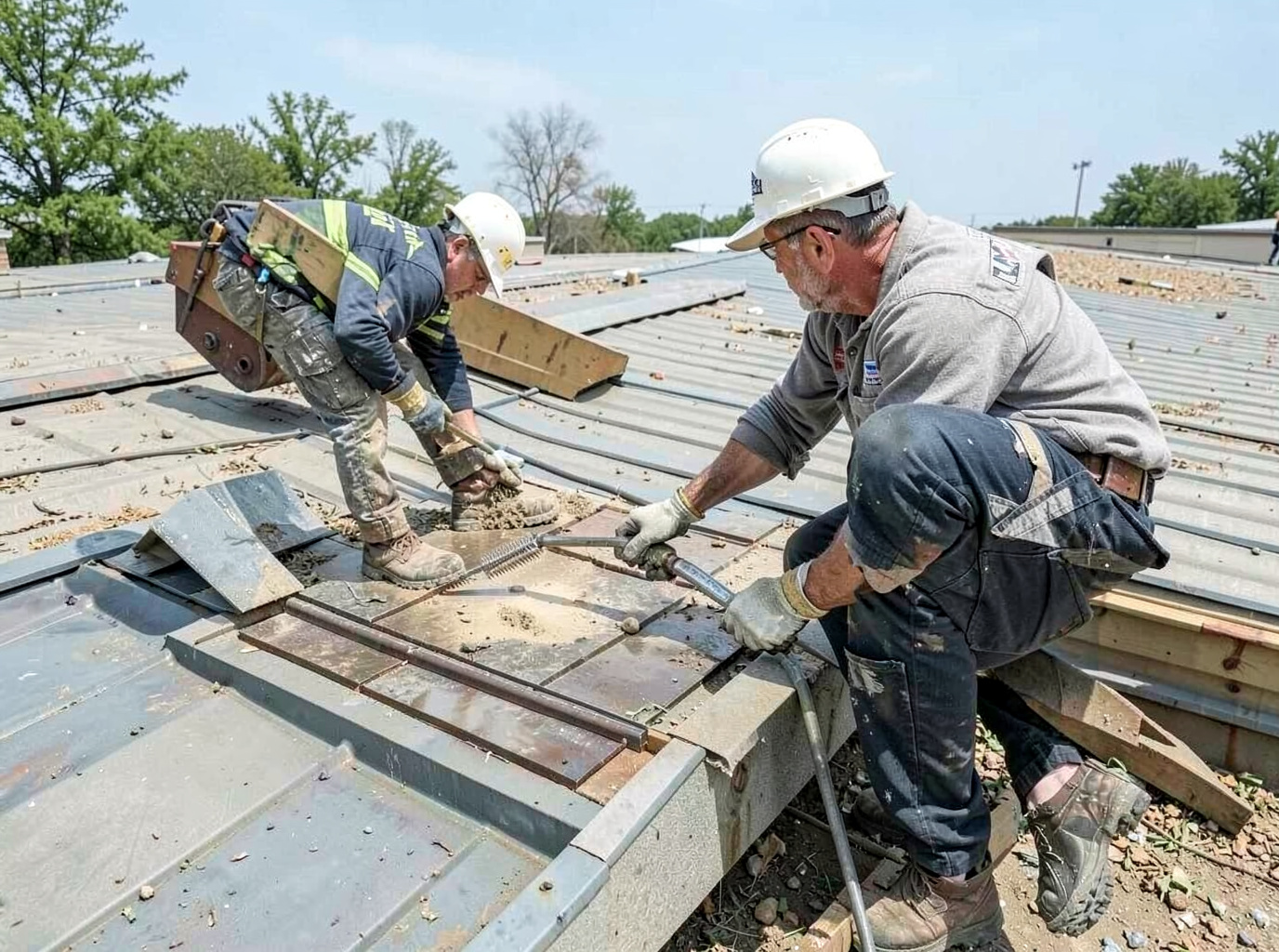
Killeen's hot summers push roof surface temperatures well above 150 degrees on dark shingles, accelerating cracking and granule loss in neighborhoods like Harker Heights where many homes date from the 1970s and 1980s. Homeowners often see premature failure on south-facing slopes first, especially when mild winters give way to sudden spring thunderstorms that drive water under lifted edges. Switching to reflective membranes or light-colored metal panels reduces heat transfer into attics and cuts cooling loads while improving resistance to the high winds that accompany Bell County storms.
Terrain around Copperas Cove and near Long Branch Park features slight slopes that can trap heat and humidity, making proper underlayment and ridge ventilation critical during replacement. Older homes near Killeen City Hall frequently have original decking that shows rot from repeated storm cycles, requiring full inspection before new heat-reflective materials go down. Using self-adhered ice-and-water shield along all valleys and eaves provides extra protection against the intense downpours that move through from the direction of Temple and Waco.
Austin's influence on material availability means many Killeen crews now stock cool-roof rated products that meet Texas energy code updates, yet local installers still see shortcuts like skipped flashing around chimneys that lead to leaks within two seasons. Proper attachment patterns for metal panels matter more here than in milder climates because thermal expansion from daily heat swings can loosen fasteners over time if spacing is off.
Frequent wind-driven rain also demands sealed ridge vents rather than open ones to keep attic temperatures lower without inviting water intrusion during the thunderstorms that hit hardest in late spring.
Technician insight
In Killeen, the thing that catches most people out with Heat-Resistant Roof Replacement is skipping extra underlayment on the south slopes of 1980s homes in Harker Heights where daily heat cycles plus thunderstorm wind lift standard shingles within five years.
Harker Heights Home South Slope Failure
Homeowner noticed soft spots and granule loss on the south-facing roof after several hot summers and spring storms. Inspection revealed deteriorated decking and missing underlayment along the ridge. Crew removed two layers, replaced damaged deck boards, installed reflective shingles with upgraded flashing, and added sealed ridge vents. The home now runs noticeably cooler and has stayed dry through subsequent thunderstorms.
Heat-Resistant Roof Replacement Services We Offer
✓Reflective Asphalt Shingle Replacement
Installs light-colored, solar-reflective shingles rated for high heat to reduce attic temperatures in Killeen homes during summer peaks.
✓Metal Panel Heat Shield Installation
Replaces existing roofing with standing-seam metal panels that reflect sunlight and withstand frequent Bell County thunderstorms without granule loss.
✓Cool Roof Coating Application
Applies elastomeric coatings over existing roofs to add heat resistance and waterproofing for homes in Harker Heights and Copperas Cove.
✓Ridge Ventilation Upgrade
Adds or improves ridge vents to release built-up heat while maintaining storm resistance on replacements near Downtown Killeen.
✓Underlayment and Flashing Reinforcement
Upgrades synthetic underlayment and all flashings to handle thermal expansion and heavy rain common in Bell County.
Heat-Resistant Roof Replacement Cost in Killeen, TX
| Service | Typical Range | What Affects It |
|---|---|---|
| Reflective Shingle Replacement | $5,500–$11,000 | Varies by roof size, pitch, and amount of deck replacement required. |
| Metal Panel Installation | $8,000–$15,000 | Higher for complex roofs or when adding insulation layers. |
| Cool Roof Coating Over Existing Roof | $2,800–$5,200 | Depends on square footage and number of coats needed for warranty. |
| Ridge Vent And Ventilation Upgrade | $1,200–$2,400 | Price moves with length of ridge and existing vent condition. |
Ranges are typical for Killeen, TX and confirmed with an exact written quote before any work starts.
How it works
- 1
Site Assessment
Inspect roof slope, deck condition, and existing ventilation on homes in target neighborhoods to identify heat-related wear patterns.
- 2
Material Selection
Recommend reflective shingles or metal panels matched to the home's pitch and exposure to Killeen's summer sun.
- 3
Old Roof Removal
Strip existing layers down to decking, checking for rot common after repeated thunderstorms in the area.
- 4
New Installation
Apply upgraded underlayment, install chosen heat-resistant material, and seal all penetrations for storm resistance.
- 5
Final Walkthrough
Review completed work with the homeowner and confirm attic ventilation is functioning to manage summer heat.
Pricing
Upfront quotes based on square footage, chosen materials, and deck repairs needed.